
Most of these case studies come from emails my readers send me. With their permission, I share them with the names changed. I do this so that others can learn from what worked and what didn't. Have a story of your own? Share it with me.
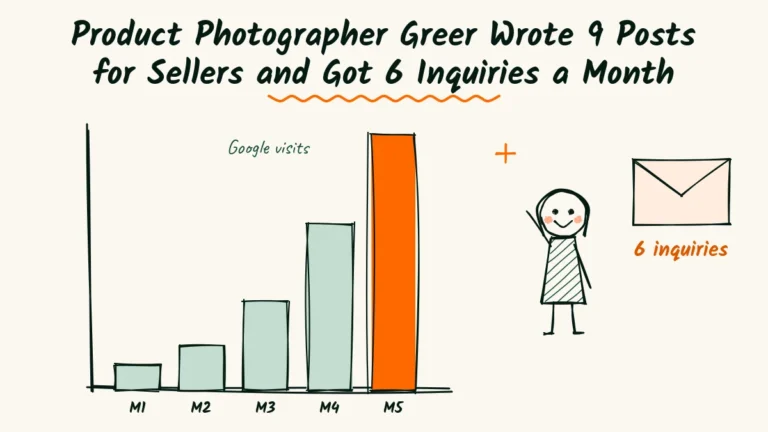
- 60 to 900Google visits a month
- 0 to 6blog inquiries a month
- 9new posts in 5 months

Lens review. Softbox review. My studio tour. Another lens review.
That was the first page of Greer Holloway’s product photographer blog in January.
Eleven posts, all about gear, all written for people exactly like her.
Greer works out of a converted garage in Sioux Falls, South Dakota, shooting candles, ceramics and skincare for online sellers.
Her blog got about 60 Google visits a month, and none of those visits had ever turned into a message.
Five months and nine new posts later, the blog brought in around 900 visits a month and six inquiries from sellers.
The problem
Greer had started blogging because everyone told her a blog was good for search.
So she wrote about what she knew best, which was her gear.
The posts were careful and well photographed. Other photographers left kind comments.
A few even asked where she bought her light stands.
But nobody ever asked her to photograph their products. When she opened her analytics, three questions kept nagging at her.
Who is actually reading this?
Most visitors came from photography forums and gear searches. They stayed a while, read about lenses and left.
They were lovely people. They just weren’t going to hire a product photographer, because they were product photographers.
Where are the sellers?
Almost no visits came from searches a shop owner might type. Nothing about Etsy, listings, color or returns.
Her blog simply never touched the problems her clients talked about on calls every week.
On those calls, sellers asked about color, size, returns and marketplace rules. Not once had a client asked which lens she used.
Why does nobody write to me?
Every post ended with a gallery and her email address.
There was no reason for a seller to reach out, because there was nothing in the post a seller needed.
Greer realized her blog was a hobby she’d been treating like a marketing plan.
The solution
Greer decided to write for the people who paid her. She kept her old gear posts online but stopped adding new ones.
Instead, she looked at the questions her clients asked most and turned each one into a post.
Every post would start with a seller’s headache, not a photographer’s tool.
That’s where the best product photographer blog ideas come from.
A product photographer blog rebuilt around sellers
She changed the blog’s short description at the top.
“Gear notes and studio life” became “Help for small shops whose photos don’t do their products justice.”
That one line told every visitor who the blog was for. It also kept her honest every time she sat down to write.
Why your candle looks orange online
Her first new post answered the question she heard most often.
Candle makers kept asking why their creamy jars looked orange in photos.
She explained it in plain words and showed a kitchen photo next to a color-checked one.
Then she gave three fixes sellers could try with a window and a sheet of white paper.
How to show the size of tiny earrings
The second post came from a jewelry client who was tired of answering “How big are they?” in her inbox.
Greer photographed the same earrings alone, next to a coin and on an ear.
Then she showed which one cut questions the most for her client.
The process that worked
Greer didn’t have much spare time. She shot five days a week and edited at night. So she built the blog around three small habits.
Tuesday questions
Every Tuesday, she spent ten minutes going through her email and messages.
She copied any seller question into a note on her phone, word for word.
By the end of the first month, she had 23 questions. Many were the same question asked in slightly different words.
A two-post month
She committed to two posts a month, no more. Each post answered one question and nothing else.
Each post followed the same simple order.
A title in the seller’s words, a short answer up top, one before and after, a few steps and a gentle next step.
Having one shape meant she never wasted an evening deciding how to start.
Before writing, she checked her titles against Google’s guidance on title links, which favors titles that describe the page clearly.
So “Why your candle looks orange online” won over clever ideas like “Orange Is the New Problem.”
One link at the bottom
Each post ended the same gentle way.
A short line said she helps small shops with listing photos, with one link to a page where sellers could send a shop link.
She asked for only a name, an email and the link. Nothing else.
What we learned from here
Greer’s story shows that a product photographer blog grows when it answers sellers, not when it impresses other photographers.
The gear posts weren’t bad. They were simply aimed at the wrong reader.
Here’s how her old and new posts compared.
| Pulled sellers in | Pulled photographers in |
|---|---|
| Why your candle looks orange online | My new 85mm lens |
| How to show the size of tiny earrings | Softbox shootout |
| What to send your photographer before a shoot | A tour of my garage studio |
| One link to send a shop link | A gallery and an email address |
By month five, the nine seller posts brought far more visits than all eleven gear posts combined.
The candle post alone drew about a third of the blog’s traffic.
Specific titles won
The posts that did best answered one narrow question in the seller’s own words.
Broad posts like “Tips for better product photos” barely moved.
Greer now writes titles by copying a seller’s question almost exactly. It feels too simple, and it works.
The slow part was worth it
For the first two months, the numbers hardly changed. Greer nearly stopped.
Then the candle post started showing up in searches, and the others followed.
The first blog inquiry came in month three, from a candle shop in Oregon.
Where Greer would start again
If she began today, she’d skip the gear posts entirely and start with her ten most common client questions.
She’d also add a dated “Updated” line to any post about marketplace rules.
Two of her posts needed fixes when a platform changed its photo guidance.
More case studies
A Plain Cost Post Gave Brand Photographer Yvette 5 Inquiries a Month

- 140 to 1,150blog visits a month
- 5inquiries a month from the blog
- 2booked shoots
Greta Wrote Fewer Blog Posts and Went From 90 to 640 Visits a Month as a Portrait Photographer

- 90 to 640Google visits a month
- 0 to 9inquiries a month from the blog
- 7sessions booked
Headshot Photographer Hollis Stops Posting Galleries and Books 3 Team Days From His Blog

- 60 to 910blog visits a month
- 8inquiries a month from the blog
- 3full team days booked
Helpful Blog Posts Bring Maternity Photographer Leigh 12 Bookings

- 60 to 740blog visits a month
- 9inquiries a month from the blog
- 12sessions booked from blog readers
Joelle’s Newborn Photographer Blog Books 13 Sessions Once It Answers Questions

- 14xmore visits from Google a month
- 9blog inquiries in the last month, up from 0
- 13newborn sessions booked from the blog in 5 months
A Post About Rain Changed Personal Branding Photographer Marisa’s Whole Blog

- 90 to 1,300blog visits a month
- 6discovery calls a month from the blog
- 2past clients who rebooked
Product Photographer Petra Cut 3 Words From Her Ad and Got 11 Messages a Month

- 2 to 11messages a month
- 5new shop clients
- $240spent on the whole test
Brand Photographer Bertrand Fixed 3 Hot Spots on His Website and Got 11 Messages a Month

- 3 to 11form messages a month
- 5shoots booked
- 14 to 5form fields