
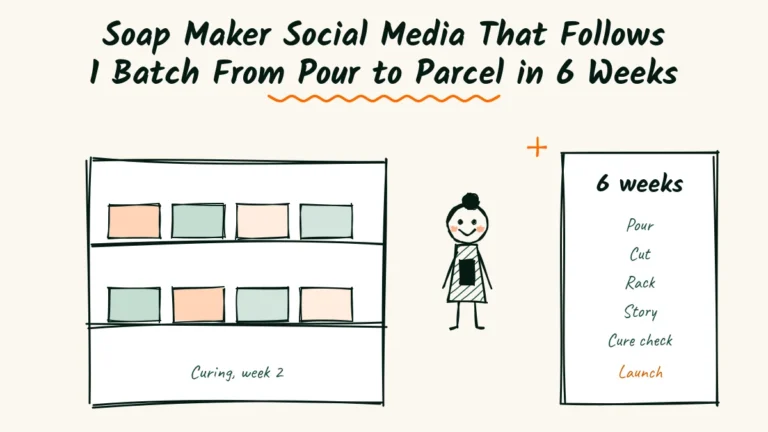

Cold process soap takes about four weeks to cure. For a month, every bar sits on a rack, slowly getting harder and milder.
That month is a gift for soap maker social media, and most makers waste it.
They post twice, once on pour day and once when the bars go on sale.
Everything in between stays hidden, and it’s the part people find most fascinating.
The swirl, the first cut, the curing rack, the smell drifting through the house.
Posting that middle part lets followers watch one batch grow up. By launch day, they already want a bar.
This guide follows a single batch for six weeks, from the pour to the parcel.
You’ll get a post idea for every stage, hooks, a caption shape, honest label rules and a simple weekly rhythm.
Who’s actually watching your soap?
Not every follower is a future customer. Knowing who’s who helps you write for the people who buy.
| Follower | What they want | What to give them |
|---|---|---|
| Gift buyers | Something pretty and easy to wrap | Bundles, wrapping, gift dates |
| Gentle-soap seekers | A bar that won’t irritate | Plain ingredient lists, honest wording |
| Market regulars | To know when you’re nearby | Market days and new scents |
| Fellow makers | Recipes and tips | Friendly replies, not your whole feed |
Fellow makers are lovely, and they often comment the most. But they rarely buy.
If your feed is all recipes and lye math, you’ll grow an audience of other soap makers.
Write most posts for gift buyers and gentle-soap seekers. Let the makers enjoy the process clips on the side.
A quick check helps before you post. Ask yourself whether a gift buyer would care about this clip.
If not, keep it for stories instead of the main feed.

Soap maker social media, one batch at a time
Pick one batch you’re excited about. A new scent, a seasonal color or a bar made for a local cafe.
Then post about that one batch, week by week. Here’s the six-week arc.
Week one, the pour
Pour day is your most visual moment. Film the swirl from above, with your hands in frame and the batter moving.
Keep it short, 10 to 15 seconds. Add one line on screen. “Pouring a new scent. You’ll know what it is in four weeks.”
A small mystery gives people a reason to come back.
If you use colors, film the moment they meet in the mold.
That swirl rarely looks the same twice, and followers love guessing how the inside will turn out.
Still week one, the cut
The first cut is the clip people save and share. A wire or knife sliding through the loaf and a bar tipping over to show the pattern.
Don’t explain much. Let the cut speak, then ask a simple question. “Which bar would you keep for yourself?”
Film it in one steady take with the phone on a stand. Shaky clips lose the calm feeling that makes cutting videos so easy to watch.
Week two, the rack
Curing sounds dull, but a full rack is satisfying to look at.
Show the bars lined up, the date on a little card and the light from the window.
This is a good moment to explain curing in one or two plain sentences. People like learning that good soap takes patience.
Add a small detail only you would know.
The rack sits in the spare room because it’s the coolest room in the house, or the cat isn’t allowed near it.

Week three, the scent story
Tell the story behind the scent. Maybe it’s the cedar tree outside your kitchen, or a lavender farm you visit every July.
A short story makes a bar feel like a gift instead of a product. It also gives gift buyers words to use when they hand it over.
Week four, the cure check
Show yourself checking the bars. Wrap one, test the lather and share how it feels in plain words.
Show the wrapping too. Paper, string and a hand-written label make people imagine giving the bar to someone.
Then announce the launch date. “Ready on Friday at 7 p.m. Just 40 bars this time.”
Weeks five and six, launch and parcels
On launch day, post the finished bar, the price and how to buy. Keep it simple and repeat it in stories through the evening.
The following week, show parcels being packed and share customer photos with permission.
That closes the loop and starts the wait for the next batch.
Hooks for the first second
On video, people decide to keep watching almost instantly. The first line on screen has to earn the second.
These hooks fit soap posts well. Borrow them and make them yours.
- This bar took 31 days to make. Here’s day one.
- Don’t scroll yet. The cut is coming.
- I almost threw this batch away.
- Guess the scent from the color.
- The most requested soap I’ve ever made.
- What four weeks on a drying rack does to a bar.

Each one promises something worth waiting for. Then the video has to pay it off.
A caption shape that sells without shouting
Short captions work best on most soap posts. Three parts are enough.
A line that adds to the picture. A small detail people can’t see. One easy next step.
Cedar and orange, cut this morning.
The cedar comes from a tree I can see from my kitchen window.
Launching Friday at 7 p.m. Turn on notifications to grab one.
Keep prices and buying details in the caption on launch posts. People shouldn’t have to message you to find out how much a bar costs.
Hashtags help a little, mostly when they’re local or specific.
A handful like your town name plus handmade soap beats thirty generic tags nobody searches.

Be careful what you promise on the label
Soap posts are where makers most often say more than they should.
Words like heals, treats and cures can change how a product is regulated.
The FDA explains this on its page about soap.
In short, the claims you make help decide whether a bar is treated as plain soap, a cosmetic or even a drug.
That means captions matter as much as labels. A post that says a bar clears eczema is making a medical claim.
Words to avoid
Skip anything that sounds like treatment. Heals, cures, treats, fixes acne, clears eczema, anti-aging.
These words might bring clicks, but they invite trouble, and they can mislead people with real skin conditions.
Words that are safer and still lovely
Describe what people can see, smell and feel. Rich lather, gentle on hands, lightly scented, unscented, made with oat milk.
List your ingredients plainly. Gentle-soap seekers trust a clear list far more than a big promise.

This is general guidance, not legal advice.
If you sell widely or make special claims, check with someone who knows cosmetics rules where you live.
Pick two places and do them well
You don’t need to be everywhere. Choose the two places where your buyers already spend time.
| Platform | What works for soap |
|---|---|
| Cut clips, curing racks, launch stories | |
| TikTok | Process videos and “guess the scent” |
| Local groups, market dates, gift ideas | |
| Gift bundles and pretty flat lays |
Most small soap makers do well with Instagram plus one other.
Local sellers often find Facebook groups bring more orders than any video.
Whichever you choose, use the same name, photo and bio line everywhere.
A shopper who meets you at a market should find you online in one search.
The plumber social media guide shows how a very different trade wins locally by being remembered.
The same idea works for soap at markets.
Film a month in one afternoon
Posting every day is exhausting when you’re also making, wrapping and shipping. Batch your filming the way you batch your soap.
Set up once, near a window, with your phone on a small stand.
- Film the pour, the cut and a few close-ups on pour day.
- Shoot the curing rack every few days with the same angle.
- Record your scent story in one take, then trim it.
- Take flat lays of wrapped bars on cure check day.
- Save everything in one album named after the batch.
One afternoon of filming can carry you through most of the month. The rest is choosing which clip to post.
Write captions in one sitting, too. Ten minutes on a Sunday evening is usually enough for the whole week.

Shoot the bar the way people use it
Most soap photos show a perfect bar on a perfect slate board. They’re pretty, and they all look alike.
Buyers picture soap by the sink, in the shower or in a gift bag. Show it there, and they can imagine it in their own home.
Real places that work
Try a bar on a chipped soap dish by a kitchen tap. A wrapped bar next to a mug and a card.
A half-used bar after a week of handwashing, still holding its pattern.
That last one surprises people. It answers a question they rarely ask out loud, which is whether a handmade bar falls apart fast.
Light, not filters
Shoot near a window in the morning. Soft daylight shows true colors, which matters when people are choosing by color and scent.
Heavy filters make a lavender bar look grey or bright purple.
Then the parcel arrives and the color doesn’t match, which nobody enjoys.

Answer the questions people ask at markets
If you sell at markets, you already know the questions. You hear them every Saturday, from almost every table visitor.
Each one is a ready-made post.
- How long does a bar last?
- Is it okay for kids?
- Why is handmade soap more expensive?
- What does lye do, and is it still in there?
- Can I use it on my face?
- Do you have anything unscented?
Answer one per week in a short video or a simple text post.
Keep the answers honest and plain, and send people to your ingredient list for details.
The lye question is a great one.
Explaining that lye reacts away during soapmaking, and isn’t left in a well-made bar, calms a common fear.

Talk back in the comments
Comments are where followers turn into customers. A quick, warm reply makes people feel noticed, and they remember it at launch time.
Answer questions fully, even simple ones.
“Is this good for sensitive skin?” deserves an honest answer about ingredients, not a sales line.
Try to reply within a day, and on launch nights within the hour. Fast answers turn “maybe” into an order.
When someone asks something you can’t answer, like a medical question, say so kindly.
Suggest they check with their doctor or a dermatologist.
Team up with local shops
Cafes, florists and gift shops often love stocking a small soap line. A shared post helps both of you reach new people.
Post a photo of your bars in their shop and tag them. Ask them to share it, and offer to do the same for their news.
Pick shops whose customers would actually buy soap. A tea shop or a flower shop usually fits better than a hardware store.
A small display card helps the post work offline too.
Your name, the scent and a QR code that leads to your page turn a curious shopper into a follower.
Visit the shop once in a while and film a short clip there.
Shops love free content, and it reminds their followers where to find your bars.
The product photographer social media guide has more ideas on borrowing a partner’s audience through a single tag.
Use stories for the small moments
Stories are perfect for the small, unpolished parts of making soap. They disappear after a day, so they don’t need to look perfect.
Share the quiet steps that wouldn’t fill a whole post.
- Weighing oils at the kitchen scale.
- Labels coming off the printer.
- A box of bars ready for a market.
- A quick poll on next month’s scent.
Polls and questions in stories are especially useful.
They tell you what people want before you make a batch, and they make followers feel part of the process.
Save your best stories as highlights, like “How it’s made” and “Next batch.” New followers can catch up in a minute.

Plan around gift dates
Many people buy handmade soap as a gift. Your posts should know when those gifts happen.
Mark the big ones on a calendar and start posting about two weeks before each.
| Gift moment | What to post |
|---|---|
| Mother’s Day | Gift sets and wrapped bars |
| End of school year | Small teacher gifts |
| Weddings | Guest favors and welcome bags |
| Winter holidays | Bundles, stocking fillers, last order dates |
Say the last day to order for delivery in time. That one line saves you from late messages and disappointed buyers.

Swap salesy words for sensory ones
Soap is one of the most sensory products there is. Your words should be too.
| Salesy | Sensory |
|---|---|
| Luxury artisan bar | Creamy oat milk bar |
| Best soap ever | Thick lather, soft scent of cedar |
| Must-have | A small treat for your sink |
| Limited edition | 40 bars, then it’s gone |
| Shop now! | Launching Friday at 7 p.m. |
Read your caption and ask whether someone could smell or feel it. If not, add one sensory word.

Count what matters
Likes feel nice, but they don’t wrap soap. Track a few numbers that actually connect to sales.
Saves tell you which clips people want to see again. Shares tell you what feels giftable.
Messages and launch-day orders tell you what’s working.
Keep a simple sheet. Batch name, best post, saves, messages and bars sold. After three batches, you’ll see a pattern you can trust.
Maybe cut clips always win, or maybe scent stories bring the most messages.
Whatever it is, make more of that and less of what nobody saves.
Don’t judge a post in its first hour. Soap clips often keep finding people for days, especially when they get saved.
Say the price without blushing
Many makers hide prices on social media because they feel awkward about them.
Then followers message to ask, and half never reply after hearing the number.
Put the price in launch posts and in your highlights. A handmade bar costs more than a supermarket one, and that’s fine.
Explain the price once, kindly
Share one post about why handmade soap costs what it does. The oils, the four-week cure, the small batches and the hand-cutting.
Keep it warm, not defensive. People who value handmade will nod along, and they’ll remember it the next time they compare.
Offer an easy way in
A small sample bar or a three-bar bundle helps first-time buyers try you without a big decision.
Many become regulars after one good bar.
Make launch day easy to join
Launch day is when all those weeks of posts turn into sales. Make it as easy as possible to buy.
Give one clear time
Announce the exact time a week ahead, then remind people the day before and an hour before.
Keep the time the same for every launch if you can.
People build habits. “New soap drops on Fridays at 7” is easy to remember.
Keep the path short
Link straight to the product, not your homepage. If you sell through messages, say exactly what to send.
After the launch, thank everyone in a short post, even if it sold out fast. It makes people want to be early next time.
Fill the slow months
Soap sales often rise before the winter holidays and dip afterward. Your posts can soften that dip.
Teach something small
In quiet months, share care tips. How to keep a bar from going mushy, why a soap dish matters and how long a bar usually lasts.
These posts get saved, and saved posts keep reaching people long after you share them.
Show the next batch early
Tease the next scent while sales are slow. A jar of dried flowers, a new mold or a color test.
A little anticipation in a quiet month makes the next launch busier.

Share customer photos with care
Photos from real customers are some of your best posts. A bar on someone’s bathroom shelf feels more honest than any flat lay.
Always ask first
Ask before you share any customer photo, even if they tagged you. A simple message works. “Can I share this lovely photo on my page?”
Most people are delighted to say yes.
Credit them warmly
Tag them and add a short thank-you. It encourages others to share their photos, too, and it builds a friendly feel around your brand.
Wrap it, label it, post it
Good soap maker social media turns a quiet month on the drying rack into a story people follow.
One batch, six weeks and a post for every stage.
The chance is real. Few makers show the cure, so the ones who do become the soap people wait for.
There’s a risk too. Big brands now sell handmade-style bars cheaply, and careless claims can bring trouble from regulators.
If your posts look generic or promise too much, you lose on both fronts at once.
Patient, honest posts are how a small maker beats both.
So pick your next batch and film the pour this week.
Write a three-line caption, choose a launch time and let your followers watch it grow, bar by bar.
Frequently Asked Questions
How often should a soap maker post?
Three or four times a week is plenty. Consistency matters more than daily posting, especially around launches.
Should I show my face in soap videos?
It helps but isn’t required. Hands, a voice-over or a short hello at launch time all build trust.
Can I share my soap recipes online?
You can, but keep them for a separate section or account. Most buyers come for the bars, not the recipe.
Do I need product photos on a white background?
For your shop listings, often yes. For social media, real settings like a sink or a gift box usually work better.
Is it okay to run giveaways for soap?
Yes, if you follow the platform’s rules and state how a winner is picked. Keep entries simple and fair.

Read next
8 Brand Photographer Social Media Posts That Reach Your Clients’ Customers

Every client has her own audience. These 8 post types, a three line caption and a collab routine help you borrow it kindly.
Read NowWhat to Post as a Personal Branding Photographer, 3 Things Every Post Needs

Your best client gives each post one second. Give it a face, a story and a step, then follow a simple weekly rhythm.
Read Now10 Headshot Photography Social Media Post Ideas That Bring Messages, Not Just Likes

Your best marketing is a client's new profile photo. Ten post ideas help that moment happen more often, in 15 minutes a day.
Read Now