

Most flyers end up where a plumber’s work begins. Under the sink, in the trash, right next to the drain cleaner.
A good plumber flyer escapes that fate. It gets taped inside a cabinet door or stuck to a water heater.
Months later, when a pipe bursts at 6 a.m., someone finds it in a panic. It doesn’t need to win today.
It needs to still be there on the bad day.
Most trade flyers fail at that.
They list twenty services in tiny print, hide the phone number and look like everything else in the mailbox.
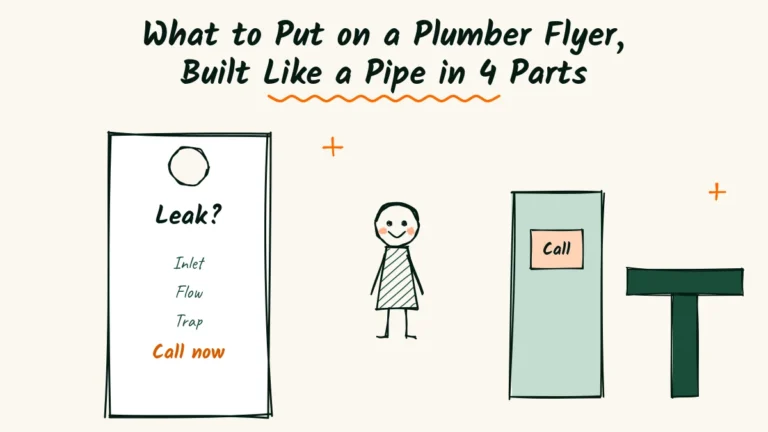
This guide builds yours like a pipe, with four parts that each move the reader along.
You’ll get headlines for leaks and clogs, a sample door hanger and a fill-in template, plus a sticker idea most plumbers forget.
Where your flyers actually live
Before you write a word, think about where your flyer will end up. A plumber’s flyer has a strange life.
It’s ignored for months, then suddenly matters a lot.
| Where it lands | How long it stays | What it needs |
|---|---|---|
| Door handle | A day, unless kept | A strong headline and a phone number |
| Kitchen drawer | Months | A clear name and a reason to keep it |
| Inside a cabinet door | Years | Big phone number, sticky back |
| Hardware store board | A few weeks | One problem, one promise |
| Apartment laundry room | Until it’s covered | Service area and landlord work |
The longer it might stay, the more it needs one thing above all. A phone number someone can read in a dark basement with wet hands.

Keep that basement in mind as you write. Every choice below comes back to it.
Why a magnet often beats a flyer
For plumbers, the best flyer is sometimes not a flyer at all.
A small magnet or a sticker stays near the problem, which a loose sheet of paper rarely does.
A magnet on the fridge or a sticker on the water heater does the remembering for the homeowner.
When something leaks, your number is right there.
That doesn’t mean you skip paper.
Use a door hanger or flyer to introduce yourself, with a small magnet or sticker attached or tucked inside.
The flyer says hello. The magnet sticks around for the emergency.
Magnets cost a little more than paper, so save them for warm leads.
Give them to customers after a job and to neighbors who stop to chat while you’re loading the van.
Put only three things on a magnet. Your name, what you fix and your phone number. There’s no room for more, and there’s no need.

The plumber flyer, built like a pipe
Water moves through a pipe in a simple order. In, along, through a trap and out. Your flyer can move the reader the same way.
Each part has one job, and together they take a stranger from glance to phone call.

The inlet, your headline
The headline is where the reader enters. It should name a problem they know, in their words.
“Dripping faucet keeping you up?” works better than “Professional Plumbing Solutions.” People don’t think in solutions.
They think in drips, clogs and cold showers.
Keep it short enough to read from the end of a driveway, about six to eight words.
The flow, what you fix
Next comes a short list of the jobs you do most. Three to five is plenty.
Leaks, clogged drains, water heaters, toilets and new fixtures.
Resist the urge to list everything. A long list looks crowded and makes each item feel less important.
If you specialize, say so. “Older homes and cast iron pipes” tells the right people you’re their plumber.
The trap, catching the worry
A sink trap catches what shouldn’t go further. This part of your flyer catches the worries that stop people calling.
Most homeowners worry about three things. The price, the mess and whether they can trust a stranger in the house.
Answer all three in one short line each.
“Upfront prices before we start.” “Shoe covers and a clean-up every time.” “Licensed, insured, local since 2009.”
The outlet, the phone number
The outlet is where the reader leaves your flyer and picks up the phone. Make it the biggest thing on the page after the headline.
Add when you answer. If you really pick up at night, say so. If not, say “Calls returned within the hour, 7 a.m. to 7 p.m.”
Honest hours beat a fake “24/7” that goes to voicemail.
Write headlines for leaks, clogs and cold showers
Different problems call for different headlines. If you print several versions, match each to the season or the street.
Here are headlines grouped by problem.
- Leaks. “That drip costs more than you think.” “Leak under the sink? Call before it spreads.”
- Clogs. “Slow drain? Don’t wait for the backup.” “Clogs cleared, no chemicals.”
- Water heaters. “Cold shower this morning?” “Water heater older than 10 years? Get it checked.”
- Toilets. “Running toilet? Fixed in one visit.”
- New homeowners. “Just moved in? Meet your plumber before you need one.”
That last one works well in new neighborhoods. New homeowners are actively looking for trades they can trust.

Write for the person holding a wet towel
Picture who reads your flyer on the day it matters.
They’re standing in a kitchen with water on the floor, a towel in one hand and a phone in the other.
They aren’t comparing brands. They want three answers fast. Can you fix this? Can you come soon? How do I reach you?
Every line on your flyer should help that person. If a line wouldn’t matter to them, it probably doesn’t belong.
What they skip
Slogans, mission statements and long lists of certifications. They’ll glance past all of it.
What they look for
A phone number they can read without their glasses, a promise about when you answer and a name that sounds local and real.

Pick the right size for each job
Plumbers use a few print formats, and each one has a different job. Choosing the right one saves money and gets more calls.
| Format | Common size | Best use |
|---|---|---|
| Door hanger | About 4 by 11 inches | Streets near a recent job |
| Postcard | About 6 by 9 inches | Mailing a whole neighborhood |
| Magnet | About 2 by 3.5 inches | Staying on the fridge for years |
| Sticker | About 2 by 2 inches | Water heaters and under sinks |
| Counter card | About 4 by 6 inches | Hardware stores and laundromats |
You don’t need all five. A door hanger plus a magnet or sticker covers most small plumbing businesses well.
Keep the same headline, colors and phone number on every format. People should recognize you, whichever piece they find.

Keep the design simple
You don’t need a designer to make a good plumber flyer. A few rules cover most of it.
Use big, plain type and one or two colors. Leave space around the headline and the phone number.
Use a real photo of you, not clip art of a cartoon plumber.
Print on thick paper for door hangers. Thin paper flaps, tears and looks cheap, especially in wind or rain.
Print a sample and tape it to your own front door for a day. Look at it from the sidewalk and from the porch.
You’ll spot anything that’s too small or too busy right away.
Ask the printer for a matte finish on door hangers. Glossy paper shines in sunlight and makes small text harder to read.
If you add a QR code, make it lead to a page with your phone number at the top, not your homepage.
Many people still prefer to call a plumber.
Speak to landlords and property managers
Landlords and property managers can bring steady, repeat work. They read flyers differently from homeowners.
They care about speed, clear invoices and tenants who stay happy.
Many manage dozens of units and need one plumber they can call for all of them.
A short line just for them can open a whole building’s worth of work.
“Rental properties welcome. Fast scheduling with tenants and photo reports after every job.”
Drop these flyers at property management offices, not just front doors.
A short note on top with your name helps it land on the right desk.
Prove you’re safe to let inside
Inviting a plumber into your home takes trust. Your flyer should answer the question before it’s asked.
Include your license number if your state requires one, and say you’re insured.
Add a clear photo of you or your team in uniform, smiling.
One short review quote helps a lot.
“Showed up on time, fixed it fast and left the kitchen cleaner than he found it.” Use real reviews with permission.
If you’re a family business, say so. “Father and son, serving Joplin since 2009” is a reason in itself.

Price lines that don’t scare people
Many homeowners avoid calling a plumber because they fear a surprise bill. A short line about price can calm that fear.
You don’t need a full price list. One plain promise does the job.
- Upfront price before any work starts.
- Service call $79, applied to the repair.
- Free estimates on water heaters and repipes.
- No overtime charge on Saturdays.
Pick the one that’s true for you, and keep it on every flyer. Consistency builds trust across the whole street.
Avoid tiny print with conditions. If an offer needs a paragraph of fine print, it’s not a good flyer offer.

Tie flyers to the season
Plumbing problems follow the calendar. Your flyers can too.
In late fall, talk about frozen pipes and outdoor faucets. In spring, mention sump pumps and sprinkler lines.
Before the holidays, remind people that guests and big meals strain kitchen drains.
March is a good time to talk about leaks.
The EPA runs Fix a Leak Week each year to remind households how much water small leaks waste.
A flyer that month feels timely, not pushy.
Keep the seasonal message to one line near the top.
The rest of the flyer, your services, trust lines and phone number, can stay the same all year.
Print a small batch for each season instead of one giant batch for the year. Fresh flyers get read.
Old ones look like they’ve been sitting in a van.

Follow the door hanger rules
Door hangers work well for plumbers, especially after a job on the same street. But there are a few rules worth knowing.
Keep out of the mailbox
In the United States, the mailbox is for mail only.
Putting unstamped flyers inside or on a mailbox breaks postal rules, and it annoys people too.
Hang flyers on door handles or hand them over in person instead.
Respect the neighborhood
Some neighborhoods and apartment buildings ban flyers. Look for no soliciting signs and follow them.
One annoyed homeowner can tell a whole street about the plumber who ignored their sign. That’s not the reputation you want.
Read a sample door hanger
Here’s how the pipe looks on a real door hanger for Lyle Thornbury, a plumber in Joplin, Missouri.
Dripping faucet keeping you up?
Leaks, clogs, water heaters and toilets, fixed by a local plumber.
Upfront price before we start. Shoe covers and a clean-up every time.
Licensed and insured, father and son since 2009.
Call or text Lyle, 417-555-0142. Calls returned within the hour, 7 a.m. to 7 p.m.
Notice what’s missing. No list of 20 services, no slogan about excellence, no stock photo of a wrench.
On the back, Lyle adds a short tip about finding the main water shutoff.
Homeowners keep the hanger for the tip, and the phone number comes along for free.

Fill in your own flyer
Use this template for a door hanger, a flyer or a postcard. Keep each line to one sentence.
[A headline naming one problem, in plain words.]
[Three to five jobs you fix most.]
[One line about price, one about mess, one about trust.]
[Your name, area and how long you’ve served it.]
[Phone number, big, plus when you answer.]
Read it from across the room. If you can’t read the headline and the phone number from six feet away, they’re too small.
The interior designer flyer guide uses a very different picture, a room.
It makes the same point about one focus and a clear path for the eye.
Swap trade words for homeowner words
Plumbers use precise words that homeowners rarely know. On a flyer, plain words win.
| Trade words | Homeowner words |
|---|---|
| P-trap replacement | Fix the pipe under your sink |
| Hydro jetting | Deep drain cleaning |
| PRV installation | Fix water pressure that’s too high |
| Backflow testing | Keep your drinking water safe |
| Tankless conversion | Hot water that doesn’t run out |
You can still use the trade word once, beside the plain one. Some homeowners search for terms they heard from an inspector.

Leave something behind after every job
The best time to hand out flyers is right after a good job.
The homeowner is relieved and happy, and the neighbors are curious about your van.
Stick it where the trouble starts
Ask if you can put a small sticker with your number on the water heater or under the kitchen sink. Most people say yes, gladly.
The next time something leaks, they won’t need to search. Your number is right where they’re looking.
Hang five on the street
After the job, hang a door hanger on the five houses on each side. Add a short line. “We just helped your neighbor on Maple Street.”
Neighbors trust a plumber who’s already been trusted next door.
Bring the door hangers into the house with you on every job. If they stay in the van, they tend to stay there.
The plumber social media guide builds on the same idea online, staying in people’s memory until the day they need you.
Make your van match the flyer
Your van is a flyer that drives around town all day. When it matches your paper flyers, each one makes the other easier to remember.
Use the same name, colors and phone number on both.
A homeowner who sees your van on their street, then finds your door hanger that evening, connects the two in a second.
Keep the van words short
People read a van for two or three seconds at most. Your name, one line about what you do and the phone number are enough.
“Thornbury Plumbing. Leaks, drains, water heaters. 417-555-0142.” Anything longer becomes a blur at 30 miles an hour.
Park where it helps
When you’re on a job, park where neighbors can see the van. It quietly tells the street that a local plumber is working nearby.
That’s also the perfect moment to hang a few door hangers on the way out.
Test it on a neighbor
Before you print 1,000 copies, show the flyer to a few people who aren’t plumbers. A neighbor, a friend or a relative works.
Hand it to them and take it back after five seconds.
Two questions to ask
What do I fix? How would you reach me?
If they can’t answer both after five seconds, the headline or the phone number needs to be bigger and clearer.
Check it in bad light
Take the flyer into a dim basement or a garage. Can you still read the phone number?
That’s where it may be read in real life, so that’s where it has to work.

Track which streets call
Flyers feel like guesswork until you track them. A simple system turns them into something you can measure.
Ask every caller one question
When a new customer calls, ask how they found you. Write the answer down, along with their street.
After a few months, you’ll see which streets and which seasons bring calls.
A simple notebook in the van works as well as any app, as long as you fill it in every time.
Use a small code
Add a short code to each batch, like “Mention JOP5 for $10 off.” Change the code for each neighborhood or season.
When someone mentions it, you know exactly which flyer worked.
Refresh your flyers each year
Flyers go stale. Prices change, services change and photos get old.
Update the details
Once a year, check every line. Your hours, prices, license number, service area and photo.
An old flyer with a disconnected number is worse than no flyer at all.
Retire what didn’t work
If one headline never brought a call, drop it. Keep the ones that did, and test one new idea each season.
Over a few years, you’ll end up with a small set of flyers that reliably bring work.
A flyer only starts the job. Send people to a plumber website that answers the same worry in its first three lines.
Flyers work best next to online ads that say the same thing. These plumber ad copy tests keep both pieces clear and honest.
Be there on the bad day
A good plumber flyer isn’t judged on the day it lands.
It’s judged on the morning the water heater leaks and someone digs through a drawer looking for help.
The opening is plain. Most trade flyers still cram in every service, so a clear one with a big phone number stands out fast.
The threat is quieter.
Big franchise brands now mail glossy postcards to every street, and online lead sites sell your neighbors’ calls to whoever pays most.
A local, trustworthy flyer that stays near the problem is how a small plumber competes.
So this week, print one simple door hanger. Hang it on the ten houses around your next job, and ask every caller how they found you.
A flyer brings the first call. What happens after the visit decides the second one.
That’s why a calm plumber client email after each visit matters as much as the flyer itself.
Frequently Asked Questions
How many flyers should a plumber print at first?
Start with 250 to 500 and test them on a few streets. Print more once you know which version brings calls.
Should I put my prices on the flyer?
Put one simple price promise, like a set service call fee. Full price lists change too often for print.
Do postcards work better than door hangers?
Both can work. Postcards reach more homes cheaply, while door hangers feel more personal after a nearby job.
Can I leave flyers at hardware stores?
Ask the store first. Many have a community board, and some let local trades leave a small stack of cards.
Should I offer a discount on my flyer?
Only if you can keep it simple and fair. A small first-visit discount works better than a big confusing deal.

Read next
What to Put on a Product Photographer Flyer, From Sticker to Booth Sign (6 Sizes)
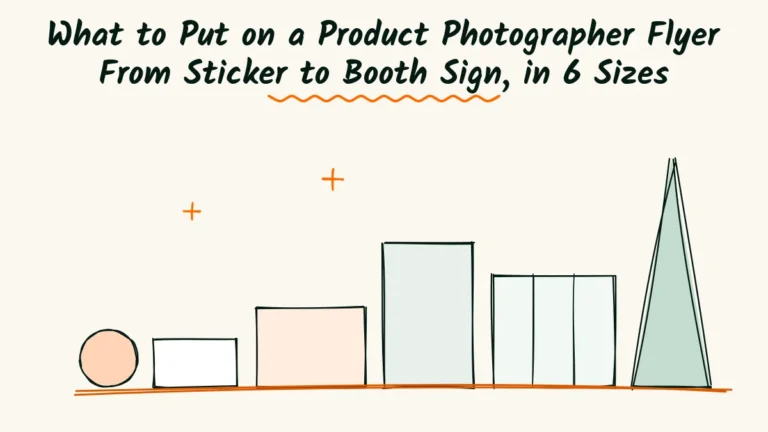
Online sellers still meet you in person. Write six print pieces, from a parcel sticker to a booth sign, that all say one thing.
Read NowMath Tutor Flyer Ideas, Solved Like a Word Problem in 5 Steps
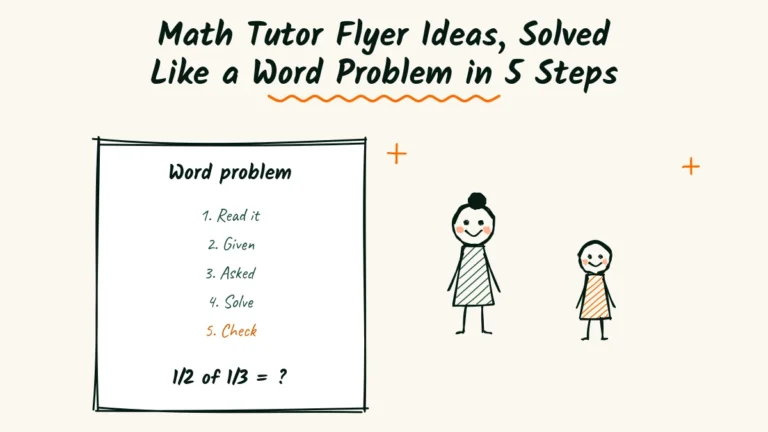
Build your tutoring flyer like a word problem, five steps parents follow in seconds, plus a tiny puzzle kids stop to solve.
Read NowPersonal Trainer Flyer Ideas Read From 3 Distances, 10 Feet to Your Table
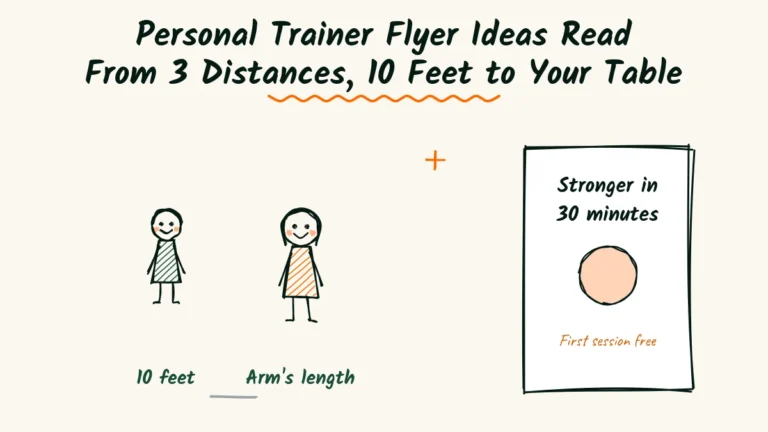
Design your fitness flyer for three distances, from a glance across the room to the kitchen table, so beginners call you first.
Read Now